
You're Not the Only One in the Therapy Room: Understanding Intergenerational Trauma
We can honor the people who came before us without repeating every strategy they used to survive.
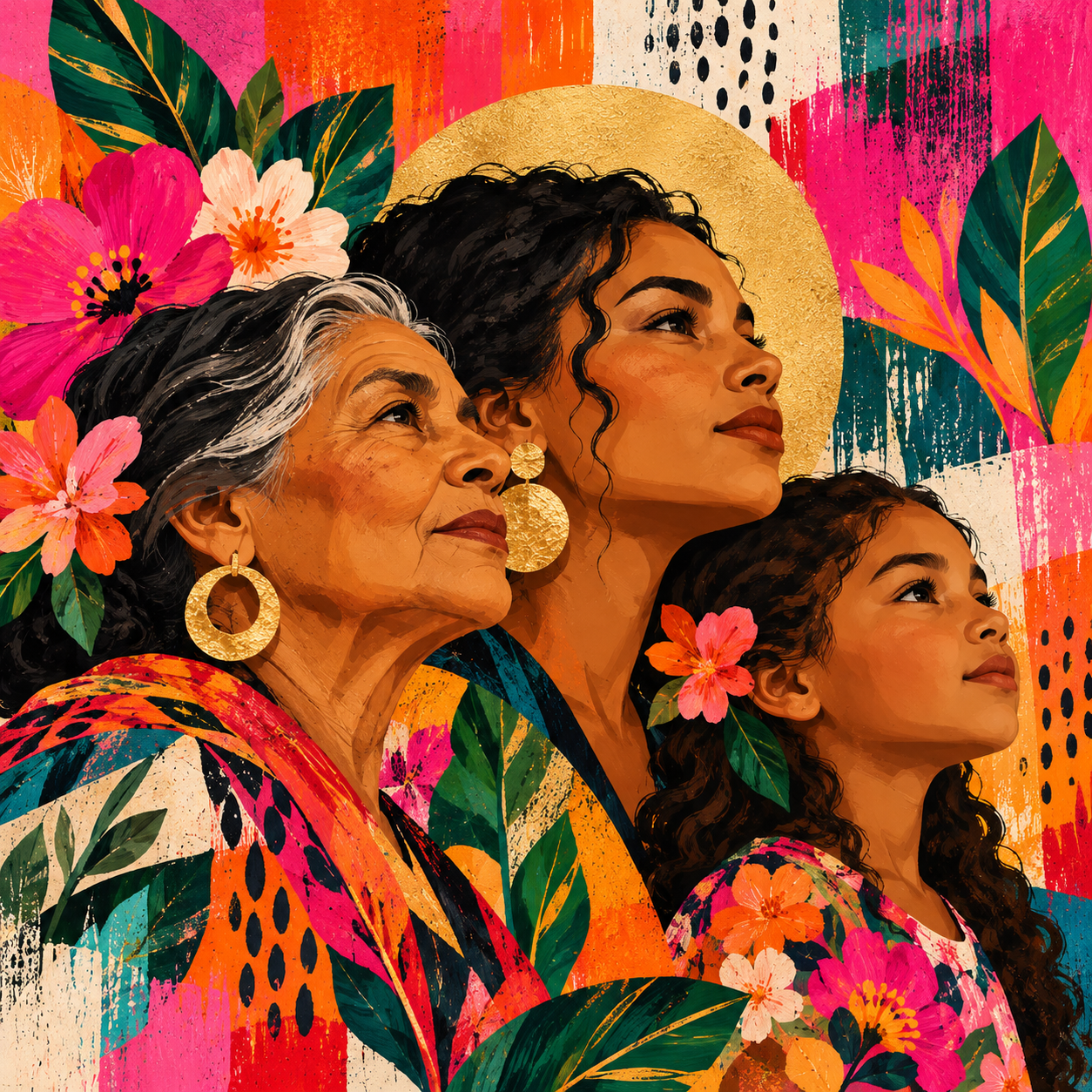
One of the misconceptions about individual therapy is that because there are only two people in the room, the work is only about one person's experiences.
But that is rarely the case.
When someone comes to therapy, they often bring much more than their own history.
They bring their parents. Their grandparents. Their ancestors. Generations of trauma, coping strategies, beliefs, and ways of surviving that have been passed down, sometimes without anyone ever realizing it.
They bring the family rules that were never spoken but always understood.
Don't talk about what happens in this house.
Don't trust outsiders.
Never let anyone see you cry.
Family comes first, no matter what.
Be strong. Keep going. Don't complain.
These messages don't emerge from nowhere. Often, they are rooted in experiences that occurred long before the person sitting in front of me was born.
How trauma becomes "just how we are"
Intergenerational trauma refers to the ways traumatic experiences and their effects can influence subsequent generations through relationships, parenting practices, family beliefs, social conditions, and learned coping strategies.
Consider a mother who was physically abused as a child.
She may have grown up in a household where anger was expressed through violence, where fear was confused with respect, and where punishment was considered an essential part of parenting.
As an adult, she may repeat those patterns with her own children, not necessarily because she wants to cause harm, but because violence became part of how she learned to manage frustration, establish authority, and respond to overwhelm.
The pattern becomes familiar. It becomes normalized.
"This is how I was raised."
"My parents did it, and I turned out fine."
"That's just how our family is."
Of course, experiencing abuse does not mean someone will go on to abuse others. Many survivors work intentionally to parent differently.
But without opportunities to reflect, heal, and develop new skills, harmful patterns can be repeated across generations.
The same can be true of other experiences.
Families may carry patterns of addiction, sexual abuse, infidelity, emotional avoidance, secrecy, or chronic distrust.
Sometimes what is passed down isn't a particular behavior but a belief about the world.
That people cannot be trusted. That love is conditional. That expressing emotions is dangerous. That survival requires constant vigilance.
Over time, these beliefs can become so deeply embedded in family culture that no one remembers where they originated.
They are simply understood as the way things are.
But families don't exist outside of history
I think it's particularly important that we expand our understanding of intergenerational trauma beyond what happens within individual families.
For many marginalized communities, historical and collective trauma are essential parts of the clinical picture.
Slavery. Genocide. Forced displacement. Colonization. Racial violence. Family separation. Systematic exclusion from opportunities and resources.
These are not simply events that occurred in the distant past.
Their consequences can continue through economic inequality, disrupted family relationships, community disinvestment, institutional mistrust, and patterns of coping that developed under extraordinarily threatening conditions.
And when families and communities have not been given adequate resources, safety, time, or opportunities to recover, those consequences can persist across generations.
Sometimes what looks dysfunctional when removed from its historical context makes much more sense when we understand what people were trying to survive.
Consider a family in which emotional expression is discouraged and children are taught to be exceptionally tough.
Without context, we might describe the family as emotionally distant or overly rigid.
But what if previous generations lived in environments where showing vulnerability could expose them to danger? What if appearing weak, challenging authority, or expressing anger openly carried serious consequences?
Emotional restraint may have developed as a strategy for protection.
That doesn't mean the strategy is necessarily helpful today. It does mean we should understand where it came from before deciding how to change it.
And importantly, not every cultural practice or family tradition is a trauma response. Culture also carries wisdom, joy, connection, resilience, and sources of healing.
Our task is to understand the difference.
Healing requires more than changing individual behavior
When we approach therapy without considering family, cultural, and historical context, we risk misunderstanding the very behaviors we are trying to help people change.
We may interpret hypervigilance as irrational anxiety without understanding the experiences that taught someone to remain alert.
We may encourage boundaries without recognizing the cultural expectations, family obligations, or real consequences that make establishing them complicated.
We may label someone's coping strategies as unhealthy without acknowledging that those strategies once helped their family survive.
Effective, culturally affirming trauma treatment requires curiosity about these patterns.
Where did they come from?
What purpose did they serve?
How have they shaped the way you see yourself and others?
Which patterns continue to protect you, and which are now creating harm?
What do you want to carry forward, and what are you ready to change?
Therapy can help people process traumatic experiences, develop new emotional and relational skills, challenge inherited beliefs, and make more intentional choices about how they live and relate to others.
But healing intergenerational trauma is not only about identifying what was harmful.
It is also about recognizing what previous generations gave us that was valuable: resourcefulness, connection, cultural pride, creativity, perseverance, and love.
We can honor the people who came before us without repeating every strategy they used to survive.
We can recognize that our ancestors did the best they could with what they had, while also acknowledging the harm that sometimes resulted.
And we can decide that some patterns end with us.
Not because we are rejecting where we came from, but because we are creating more possibilities for where we go next.